
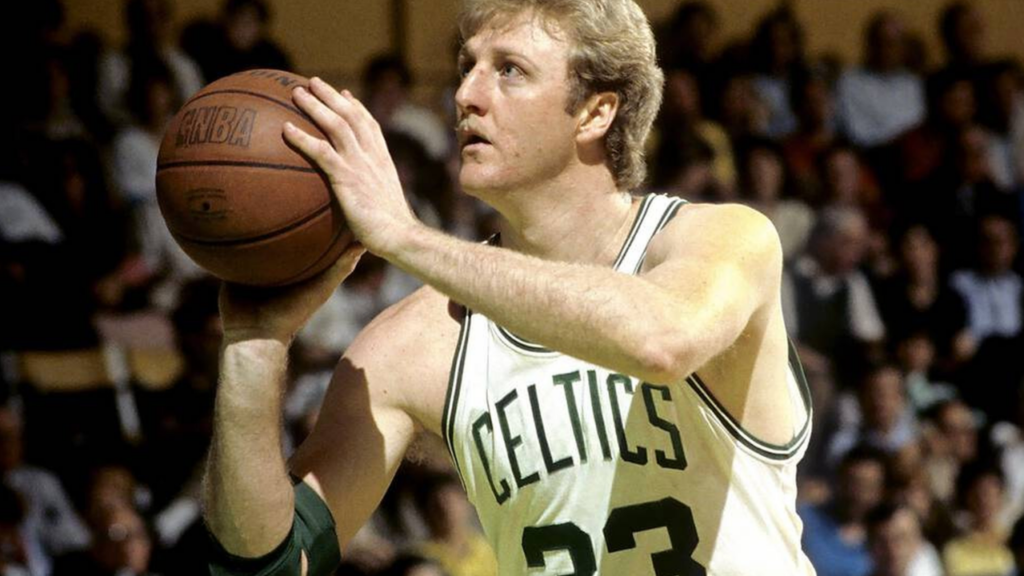
There are places where the real verdicts on greatness get handed down — not in press boxes, not on broadcast sets, but in barbershops. In Black communities across America during the 1980s, the barbershop was the court of final appeal. Names got dissected, reputations got made, and frauds got exposed without mercy. Magic Johnson said it plainly during an ESPN “Two on Two” special featuring himself, Bird, LeBron James, and Carmelo Anthony: “Larry Bird was the only guy that was mentioned in the barbershop. And they’ll tell you, ’cause that’s where all the talking in our community is — the barbershop or on the playground.” One white player. One name. In a league that was, by Bird’s own admission, “a Black man’s game and it will be forever.” That is not a compliment handed out lightly. That is a verdict.
What Made Bird Different
The NBA in the 1980s ran at roughly 70% Black players, and the cultural center of gravity was unmistakably Black. Bird understood this. He didn’t fight it — he operated inside it and earned his standing on those terms. Magic put it directly: “Larry Bird, you see, can go into any neighborhood. When you say ‘Larry Bird,’ Black people know who he is, Hispanics, whites, and they give him the respect.” This wasn’t about optics or crossover marketing. Bird won three consecutive NBA MVP awards from 1984 to 1986, a streak matched in history only by Bill Russell and Wilt Chamberlain. He delivered 3 championships, 12 All-Star appearances, a career 60-point game, and 59 regular season triple-doubles. Numbers like those don’t ask permission to be respected. They demand it.
The Fear That Proved the Respect
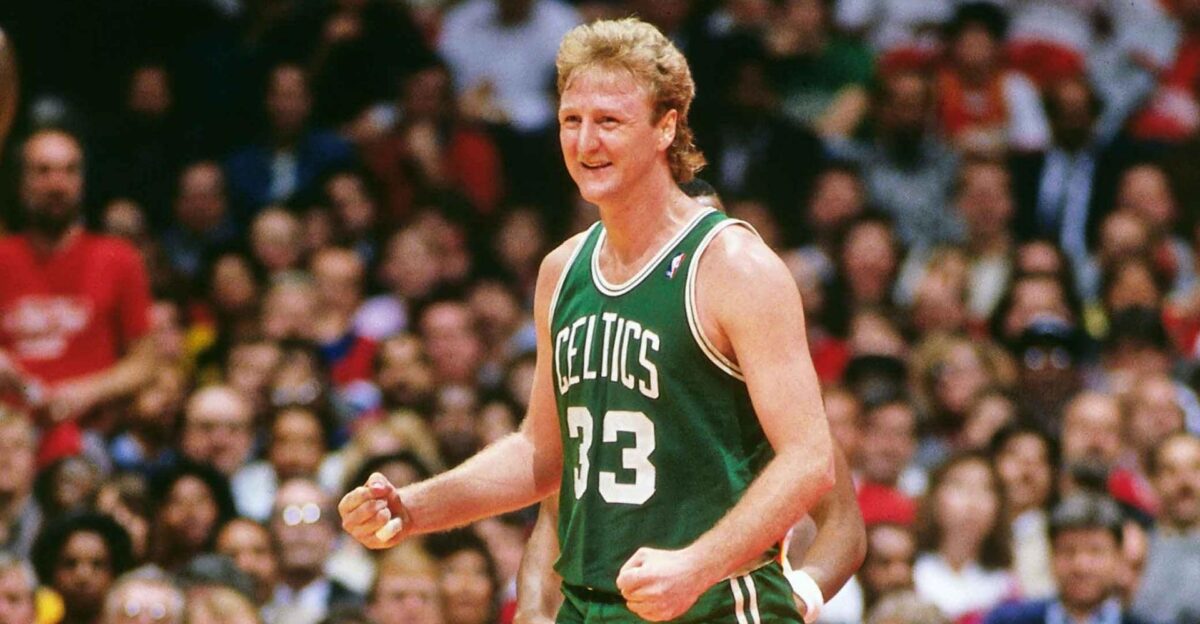
Magic Johnson rarely admitted fear. He didn’t have to. But on the subject of Larry Bird, he put it on record: “The highest respect I can pay any player is you fear them. Larry was the only player I feared.” That quote lived on a Skybox NBA card. It wasn’t a throwaway line — it was a confession from the most decorated guard of his era. Bird’s own words sharpened the picture from the other side. He was offended, genuinely offended, when a white player guarded him in a game. “As far as playing, I didn’t care who guarded me — red, yellow, Black. I just didn’t want a white guy guarding me, because it’s disrespect to my game,” Bird said. Magic’s one-word response: “Disrespect.” Two rivals, opposite coasts, same standard. Bird had absorbed the game’s culture so completely that a white defender felt like a demotion.
A Legacy That Crossed Every Line
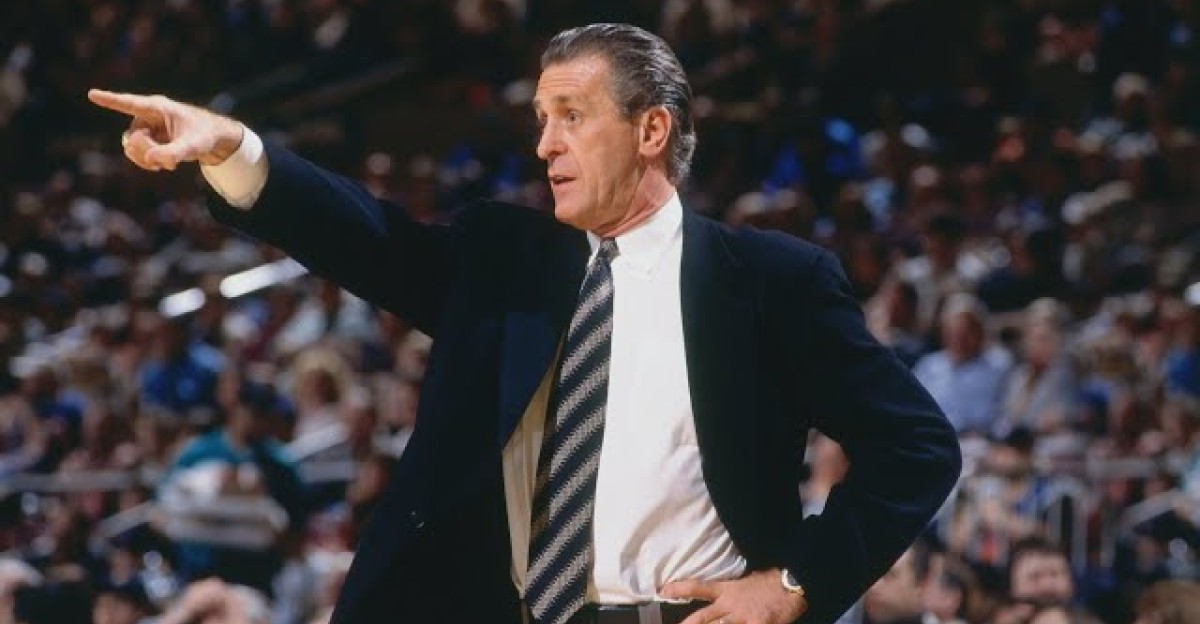
Pat Riley, who coached against Bird in multiple Finals, said: “If I had to pick one person to take a shot to save a game, I’d choose Michael Jordan. But if I had to pick one person to take a shot to save my life, I’d choose Larry Bird.” That is the full measure of the man. The barbershop talked about Bird not because he was white, but because he competed the way those communities valued competition — relentless, skilled, and utterly without excuses. Magic and Bird locked horns for a decade, their rivalry credited by historians with pulling the NBA back from its lowest ratings period and making it a television centerpiece. When Magic went public with his HIV diagnosis in 1991, Bird called him directly — not a PR gesture, not a press statement, a phone call. The only man in the NBA who truly understood what Magic carried was the man who competed against him the hardest. In the end, the barbershop got it right before anyone else did.
Sources:
“Bird: NBA ‘a black man’s game’.” ESPN, 8 Jun 2004.
“White Stars Needed: Bird.” Los Angeles Times, 8 Jun 2004.
“Larry Bird | Biography & Facts.” Encyclopaedia Britannica, 1 Oct 2025.
“Larry Bird named the only player who could challenge him mentally.” Yahoo Sports, 7 Dec 2025.